posit::conf(2026)

AI Agents
Deserve R

Am I missing out?

I kept getting stuck on the same question.
Should I…
move this to Python?
just tell them to use
Claude Code?

You chose R for a reason
domain
knowledge
data
workflows
You already know what good work looks like.
Bring agents into that work.

Agents do not need the largest ecosystem.
They need a coherent one.

Something I wanted for myself
Help me catch up.
Build a habit & get better as I use it.

What should I focus on? What should I keep for later? Where else might I use this?

What if I skipped Tuesday?
Monread
Tueunread
Wedtoday
The important story might still be Tuesday’s.
Use what I have read to help me decide what to read next.

Rill

A personal feed reader.

Rill’s otter floats comfortably on its back, reading a cream booklet amid a few teal ripples.
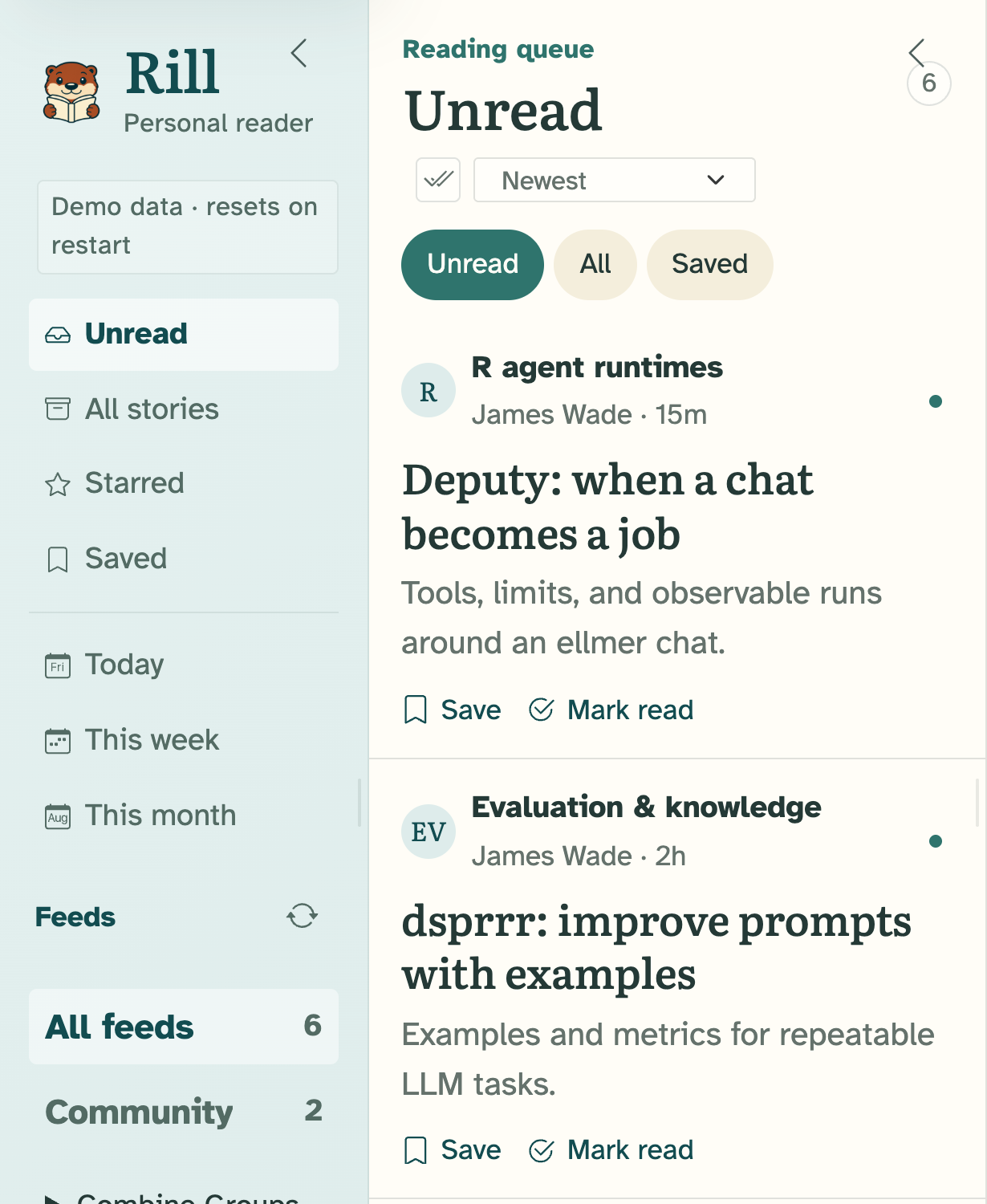
Rill’s navigation and unread queue, with Deputy and dsprrr articles waiting to be read.

Orientation

The otter selects an article card from a small fan of unread pages, with another choice beside a closed teal book.
Rill · github.com/JamesHWade/rill · redrawn from the app at slide scale

A reason to read it

The otter compares a short note with a highlighted passage in an open book and points to the source passage.
Rill · github.com/JamesHWade/rill · redrawn from the app at slide scale

Was this Orientation useful?

The otter writes a short response on a cream card, with the two selected articles beside its paw.
Rill · github.com/JamesHWade/rill · redrawn from the app at slide scale

Questions while reading

The otter pauses over an open book, looking up with one paw raised as if asking a question while the other marks its place.
Rill · github.com/JamesHWade/rill · redrawn from the app at slide scale · scripted answer

Start to finish,
that was an R program.

An ode to

shinychat

The shinychat package hex sticker: two chat bubbles on a blue hexagon.
Thank you, shinychat. Carson Sievert · Garrick Aden-Buie · Joe Cheng · Barret Schloerke
and everyone who contributes to shinychat

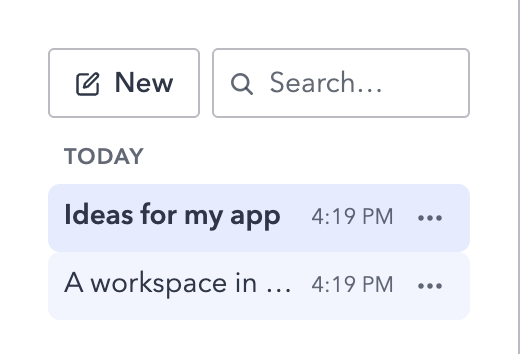
Conversation history

Search for an old chat. Fork your session. Manage state in your shiny app.

The native history sidebar with New, Search, and two conversations: Ideas for my app and A workspace in Shiny.
The revised question, How could I use this in a Shiny app?, with the native 2 / 2 version control and an arrow back to the original branch.
Enjoy the perks of persistence out of the box.
shinychat · real UI, scripted sample

Thinking traces and tool calls

Thinking traces
The expanded native thinking panel shows two scripted topic labels, Reading the source and Preparing a note, with a short description under each. The native composer during streaming, with an attachment control on the left and a centered red stop button on the right.
You can stop a reply as it streams.
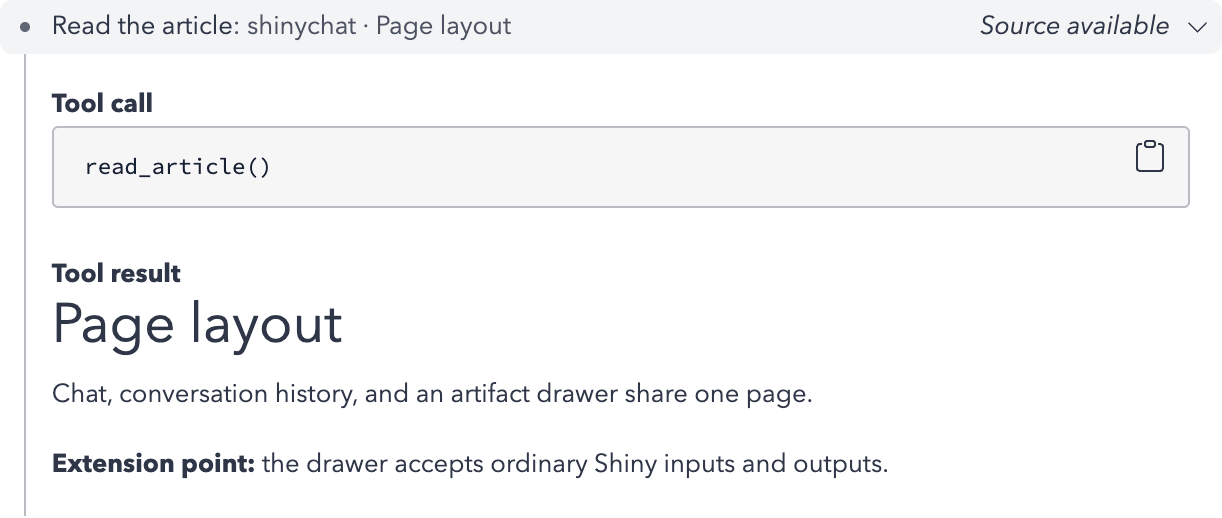
Tool calls
An expanded native tool call displays read_article(), its returned page-layout summary, and the result's custom title and label.
Inspect a tool call and understand how an agent is using it.
shinychat · real UI but a scripted sample

Slash commands

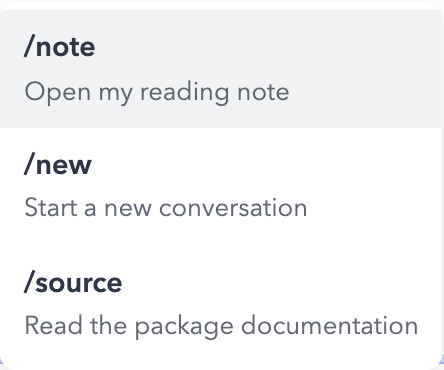
Type / to run one of your own commands.

The native slash-command palette offers /note to open a reading note, /new to start a conversation, and /source to open documentation.

handle$slash_command(
  "note", "Open my reading note",
  function() {
    chat_drawer_show("reader")
  },
  echo = FALSE
)
Here, /note opens the drawer.
shinychat · real UI with app-defined commands

The artifact drawer

And it’s
still Shiny

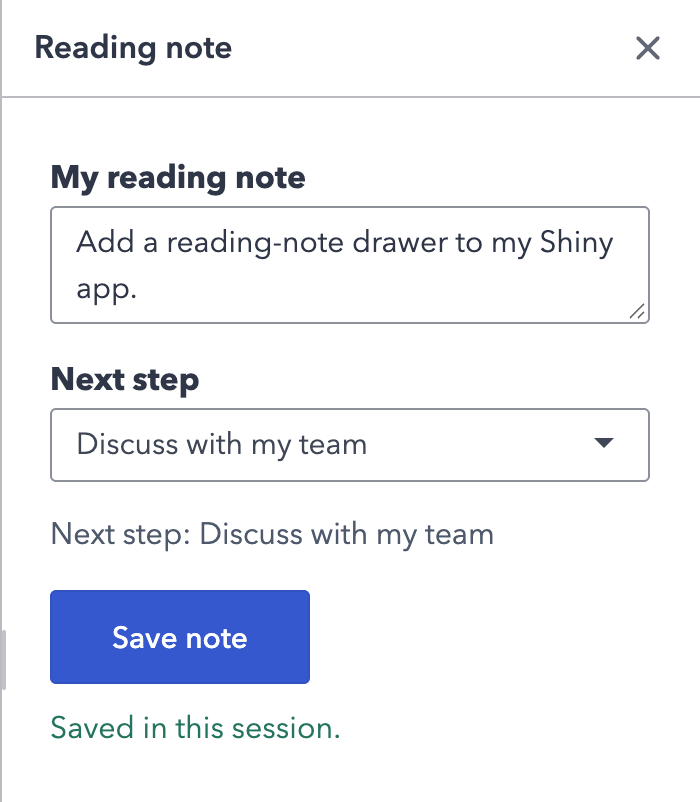
Put your Shiny UI right beside the chat.

Forms · plots · tables · htmlwidgets
A real shinychat drawer containing a Shiny reading-note form: an editable note, a Next step selection, a reactive output reflecting Discuss with my team, and a Save note button with its session confirmation.
shinychat drawer · ordinary Shiny UI inside

Add it to your Shiny app

shinychat hex sticker

# In the UI
chat_ui("reader")

# In the server
handle <- chat_server("reader", client = chat)
I can get on with building the reading assistant.
shinychat development · 0.5.0.9000

The agent asks to call an R function

ellmer hex sticker

read_article <- tool(
  fun = function() article,
  name = "read_article",
  description = "Read this article and its source.",
  annotations = tool_annotations(
    read_only_hint = TRUE, open_world_hint = FALSE
  )
)
Your existing R code becomes a capability the agent can use.

Deputy gives the agent a job to do

Deputy hex sticker

agent <- Agent$new(
  chat = chat,
  tools = list(read_article),
  permissions = Permissions(
    mode = "readonly", tool_allowlist = "read_article"
  ),
  usage_limits = UsageLimits(max_requests = 6)
)
result <- agent$run_sync(question)
“What does this article demonstrate, and what is still unresolved?”

The Orientation task in dsprrr

dsprrr hex sticker

orient <- module(
  signature(
    "unread -> selections, reasons, evidence, themes"
  )
)
The task stays the same across different unread sets.

Improving the Orientation program

dsprrr hex sticker

candidate <- compile(
  orient,
  GEPA(metric = score_orientation),
  trainset = examples,
  valset = validation,
  .llm = chat
)
Compare with the original on unread sets kept out of optimization.

The pieces fit the work.

Questions while reading Deputy: when a chat becomes a job
Can I use Deputy with shinychat?
Source Document›

Yes. Pass the Agent to shinychat::chat_server().

Rill · the reading interaction from earlier

This is what
coherent
looks like.

The agent reads the article.
I can inspect exactly what it read.

CRAN reinforces shared habits:
documentation, dependencies,
and package checks.

A smaller map
makes gaps
visible.

good idea elsewhere
R-shaped implementation
dsprrr hex sticker Deputy hex sticker Tempest hex sticker, a storm petrel flying through swirling wind Graft hex sticker, a tree frog tending a grafted branch scans hex sticker, a raccoon inspecting pawprints
Coding agents can help with the implementation.
You still choose the interface.

Am I missing out?
Less than I feared.
Small enough to see the gap.
Coherent enough to fill it.

Keep your hex stickers.
Bring your agents with you.